
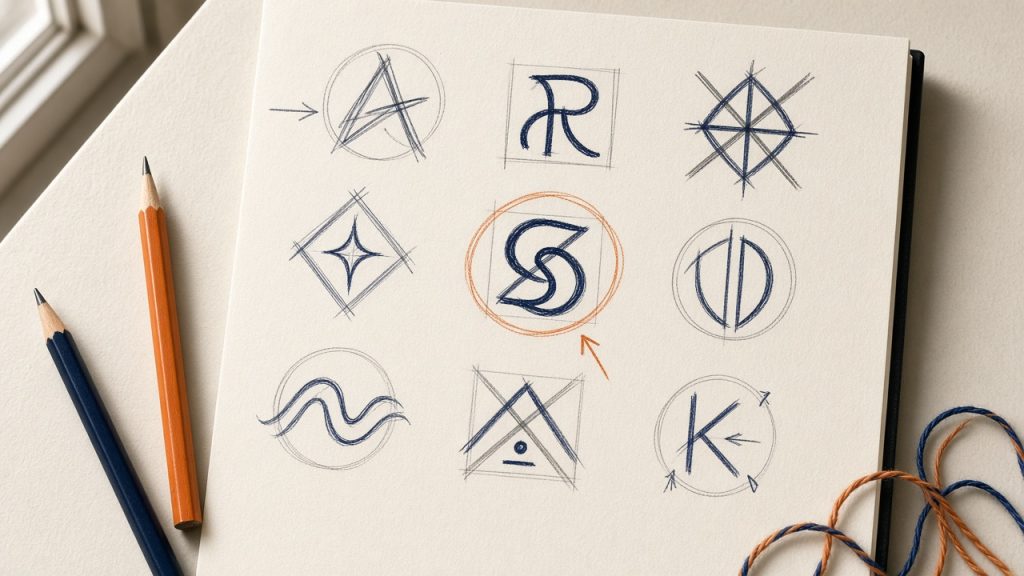
AI logo makers and templates can give you a usable logo in an afternoon. Sometimes that’s all you need. Here’s how to tell, and what to check before you build a business on one.
Start with how long it needs to last
Ask yourself one question first. How long will this logo be around?
A pop-up, an event, a side project or a test of a new idea might only need a logo for a few months. The name on your van, your packaging and your shopfront is a different matter. It’s likely to be with you for years, and you’ll want to know it’s yours.
Where the free tools are fine
Logo makers are good at getting something on screen quickly. That’s useful when you’re testing whether an idea has legs, or seeing how a name looks written down.
Canva puts it fairly itself. It says a logo template is “a great way to create a logo if you’re just starting out and you’re not worried about having exclusive rights”.
If that’s where you are, use one. Keep it simple, treat it as a placeholder and spend the money on testing the idea.
Check what you actually own
This is where the details matter. Each tool has its own terms, and they’re worth ten minutes of your time.
Canva says its logo templates can be used by anyone. Your rights are non-exclusive, and you can’t register a template logo as a trade mark. Its content licence also rules out using its library content as part of a trade mark or business name, with fonts as the exception. Canva does say you can build an original logo from its fonts and simple shapes, or upload one you’ve commissioned.
Looka says you own your purchased logo as a whole, but not the individual icons and fonts in it. Those come from a database and aren’t removed after you buy. Its terms also recommend that you check for yourself that the design elements aren’t subject to third party rights.
So the icon in your logo could turn up in someone else’s. If you’re using a different tool, look for the words “exclusive”, “licence” and “trade mark” in its terms.
Think about trade mark protection
A logo can be registered as a trade mark. GOV.UK says a trade mark can’t be too common or non-distinctive. You may also not be able to register one that’s the same as, or similar to, a mark used by another business selling the same goods or services.
Before you apply, search the trade mark register for anything close. If you find something, GOV.UK’s advice is to get professional advice first. Free advice is available from the IPO, an IP clinic or the British Library Business and IP Centre. I’m a designer, not a lawyer, so take this as a list of things to check, not legal advice.
Remember a logo is one piece
A logo maker asks for your name, your industry and perhaps a style you like. It can’t ask who you’re for, what makes you different or where you meet your customers.
Those answers shape the mark. Social Buzz Hub is a social media agency in Chelmsford. The route the client chose was built around a simple idea: conversation. Chat shapes are worked into the lettering, linking the name to the exchanges at the heart of social media.
If the logo isn’t the real problem, a new one won’t fix it. That’s worth reading about in do you need a new logo, or a clearer brand?
Where it can cost you later
If the business grows, a free logo can start to cost you. You might decide to register a trade mark and find the logo doesn’t qualify. A competitor might use the same icon from the same library. By then the logo could be on your van, your packaging and your signs, so changing it would mean paying for all of them again.
None of this is certain, and none of it makes the tools wrong. The cheap option and the long-term option just aren’t always the same one.
Choose for the stage you’re at
Sometimes a template is the right call for now. Sometimes the name is about to go on a shopfront and a trade mark application, and it’s worth owning the logo outright. Start with how long it needs to last, then choose.
If you’ve started with a logo maker, that’s a useful starting point. Tell me a little about the business and we’ll work out whether it needs a designer yet.